In today’s fast-changing world of precision navigation and positioning tech, picking the right Gnss Receiver Imu for your specific needs is more important than ever. With 2025 just around the corner, experts are really stressing the importance of making smarter, more informed choices in this area. I mean, Dr. Emily Chen from Terra Dynamics, a true pro when it comes to GNSS stuff, puts it perfectly: "Choosing the right GNSS Receiver IMU can make a huge difference in how accurate and reliable your data is, whether you’re working on self-driving cars or mapping out the land." That just goes to show how critical integrated GNSS systems are across different fields.
The combo of GNSS and Inertial Measurement Units (IMUs) has totally changed the way we tackle navigation challenges. It’s like, performance and reliability have gotten a serious upgrade. If you're working in this space, understanding what matters most—like accuracy, drift, and how well everything fits together—is super important to make the most of these high-tech tools. As we dig into this tech stuff, one thing’s clear: making well-informed decisions can really give you an edge, helping your projects perform at their best. Getting a handle on these key factors is all about staying ahead in this competitive scene as we look forward to 2025.

Understanding GNSS and IMU Technologies for 2025 Applications
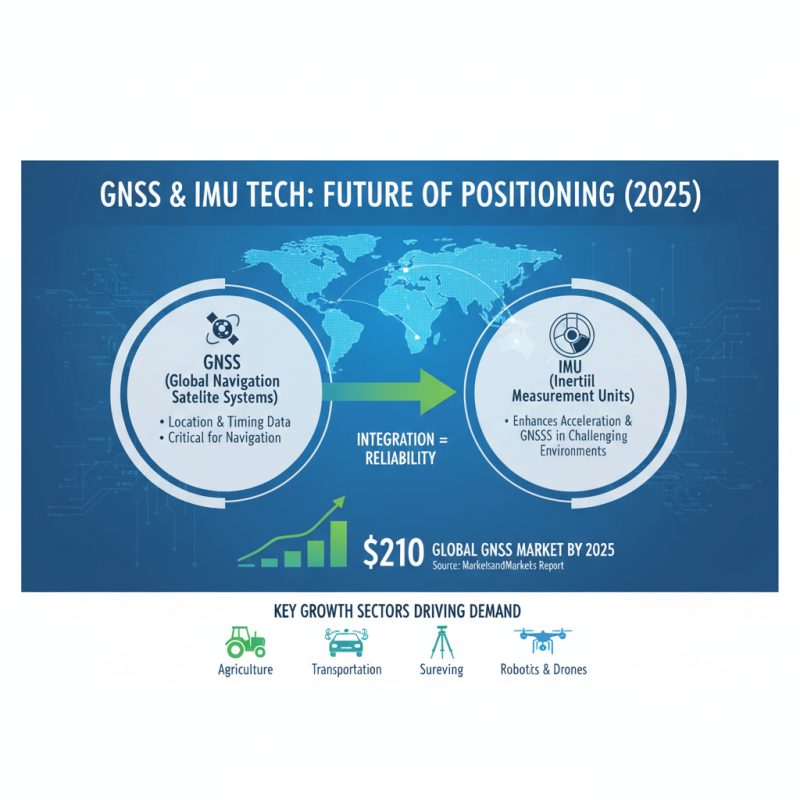
The advancements in Global Navigation Satellite Systems (GNSS) and Inertial Measurement Units (IMU) technologies are pivotal for applications across various industries in 2025. GNSS provides critical location and timing data, while IMUs enhance this information by tracking acceleration and angular velocity. According to a report by MarketsandMarkets, the GNSS market is projected to reach $210 billion by 2025, driven by the increasing demand for accurate positioning in sectors such as agriculture, transportation, and surveying. The integration of IMUs with GNSS receivers enhances performance in challenging environments where satellite signals may be compromised, ensuring consistency and reliability.
As applications evolve, the need for robust GNSS receiver IMUs grows, particularly in autonomous vehicles and drones. A study from ResearchAndMarkets indicates that the IMU market is anticipated to experience a CAGR of 7.8% from 2020 to 2025, highlighting its importance in enhancing payload performance and navigation accuracy. The fusion of GNSS and IMU technologies enables precise dead reckoning capabilities, allowing users to maintain positional accuracy even when GNSS signals are weak or unavailable. With the increasing complexity of navigation requirements, selecting the right combination of GNSS and IMU will be crucial for achieving optimal results in future applications.
Key Factors to Consider When Selecting GNSS Receivers
When selecting a GNSS receiver IMU for your applications, there are several key factors to consider that can significantly influence the performance and suitability of the system. First and foremost, the intended application should guide your choice. Whether it's for autonomous vehicles, aerial drones, or geospatial surveying, different settings may require specific accuracy levels, data rates, and response times. Understanding the environmental conditions, such as urban canyons or dense forest areas, can also help determine the robustness needed in a GNSS receiver.
Another critical factor is the receiver's specifications, including the number of channels, GNSS signals supported, and the capability for Real-Time Kinematic (RTK) processing. A receiver that can utilize multiple GNSS constellations, such as GPS, GLONASS, Galileo, and BeiDou, provides enhanced positioning performance and reliability. Additionally, the integration capabilities with other sensors, such as inertial measurement units (IMUs), should be assessed to ensure accurate data fusion, especially in dynamic environments. Assessing the power consumption and physical dimensions is also essential, particularly for mobile applications, where compact and energy-efficient designs are preferred.
How to Choose the Right GNSS Receiver IMU for Your Applications in 2025 - Key Factors to Consider When Selecting GNSS Receivers
| Criteria | Description | Importance Level |
| Accuracy | The ability to determine the precise location, typically measured in centimeters or meters. | High |
| Update Rate | The frequency at which the positions are updated, usually measured in Hz. | Medium |
| Integration with IMU | Compatibility and ability to interface with Inertial Measurement Units for improved positioning. | High |
| Number of Channels | The total channels available for satellite reception, impacting accuracy and speed. | Medium |
| Power Consumption | Amount of power required for operation, important for portable applications. | Medium |
| Cost | The price of the receiver, which can vary based on features and performance. | High |
| Environmental Specifications | Operating temperature ranges and resistance to harsh conditions. | Medium |
| User Interface | Ease of use and interface options for users to monitor and control settings. | Low |
Evaluating IMU Specifications for Precision Navigation
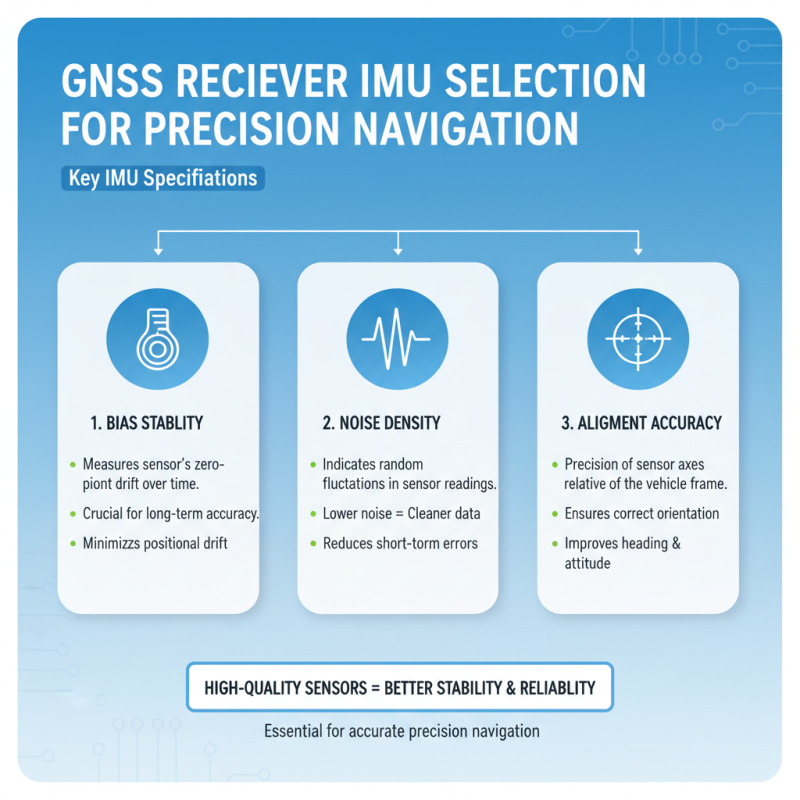
When selecting the right GNSS receiver IMU for precision navigation, evaluating the specifications of the Inertial Measurement Unit (IMU) is crucial. Precision navigation depends heavily on the accuracy and reliability of the IMU's sensors, which measure acceleration and angular velocity. Key specifications to consider include the sensor's bias stability, noise density, and alignment accuracy. High-quality sensors will provide better long-term stability and minimize drift during operations.
**Tips:** When reviewing IMU specifications, always look for performance metrics under varying environmental conditions. This will help ensure that the IMU can perform reliably in the specific conditions relevant to your application. Additionally, consider the calibration processes required for the IMU – a well-calibrated unit can significantly enhance the accuracy of your GNSS receiver.
Another important aspect is the integration capability of the IMU with GNSS technology. Ensure that the receiver can seamlessly process data from both systems. Some IMUs offer advanced algorithms that enhance data fusion, providing better overall positioning accuracy. Always evaluate how the IMU's specifications match your application’s unique requirements, whether it’s for surveying, autonomous vehicles, or aerial mapping, to guarantee optimal performance.
**Tips:** Before making a decision, conduct hands-on testing with the IMU in real-world scenarios similar to your intended use. This practical evaluation can reveal critical insights about performance that specifications alone may not provide.
Integration of GNSS and IMU: Benefits and Challenges
The integration of GNSS (Global Navigation Satellite System) and IMU (Inertial Measurement Unit) technologies has transformed the landscape of navigation and positioning applications. By combining these two systems, users can achieve enhanced accuracy and reliability in various settings, from autonomous vehicles to precision agriculture. According to the "Global Gnss Market Analysis" report by ResearchAndMarkets, the market is expected to grow at a CAGR of 5.4% to reach $160 billion by 2025, driven by the increasing demand for accurate positioning solutions.
However, the integration process presents several challenges. The primary concern is aligning the different data sources; IMU provides high-frequency data but can suffer from drift over time, while GNSS offers longer ranges but may be vulnerable to obstructions and signal degradation. Achieving a seamless fusion of data from these two technologies requires advanced algorithms and robust calibration methods to ensure that users receive consistent and reliable positional information, regardless of the environment.
Tips: When selecting a GNSS receiver and IMU, consider the application environment. If operating in urban canyons, look for receivers with advanced signal processing capabilities. Additionally, assess the latency requirements of your application; real-time systems demand low-latency data fusion to maintain performance. Lastly, ensure your system can accommodate significant updates in technology as the GNSS landscape continues to evolve rapidly.
Future Trends in GNSS and IMU Technology Development
The rapid advancement of Global Navigation Satellite System (GNSS) and Inertial Measurement Unit (IMU) technologies is reshaping diverse industries, from autonomous vehicles to precision agriculture. By 2025, we can expect significant improvements in system accuracy, reliability, and integration capabilities, enhancing applications that rely heavily on these technologies. A report by the International GNSS Service suggests that multi-frequency GNSS receivers will lead to a decrease in positioning errors to within centimeters, making them essential for high-precision applications.
As GNSS technology evolves, trends indicate a growing convergence with IMU systems. This synergy will likely enable enhanced sensor fusion, where GNSS data is seamlessly combined with accelerometer and gyroscope information. This integration is anticipated to improve navigation performance in environments where GNSS signals may be weak or obstructed, addressing critical challenges faced by industries such as robotics and drone operations. According to a recent market analysis, the IMU market is projected to grow at a CAGR of 8.8% over the next five years, driven by increased demand for accurate navigational solutions.
Tip: Before selecting a GNSS receiver and IMU combination, consider the specific requirements of your application, such as environmental conditions and required accuracy levels. A thorough analysis of these factors will guide you in finding the optimal solution. Tip: Stay informed about technological advancements and emerging trends in the GNSS and IMU sectors to ensure your systems remain competitive and efficient in a rapidly evolving landscape.
Use Cases for GNSS Receiver IMUs Across Various Industries
In 2025, the utilization of GNSS receiver Inertial Measurement Units (IMUs) is set to expand across various industries, driven by the growing need for precision and real-time data. The aerospace sector, for instance, increasingly combines GNSS and IMU technology to enhance navigation accuracy and reliability in unmanned aerial vehicles (UAVs). Reports indicate that the global UAV market is expected to reach $41 billion by 2026, highlighting the crucial role GNSS and IMUs play in ensuring safe and effective operation, particularly in complex environments where GPS signals may be unreliable.
Similarly, the automotive industry is embracing GNSS receiver IMUs to facilitate advanced driver-assistance systems (ADAS). According to a market analysis, the ADAS market is projected to grow at a CAGR of 14.5%, with GNSS being pivotal for real-time positioning and sensor fusion. The integration of these technologies not only improves vehicle localization but also enhances safety through features like lane-keeping assistance and collision avoidance, thus transforming the landscape of smart transportation.
Furthermore, the construction and surveying sectors are leveraging GNSS receiver IMUs for high-precision applications. With the global construction market expected to exceed $10 trillion by 2025, accurate positioning data is essential for site management and equipment tracking. The combination of GNSS and IMU technologies ensures that construction professionals can maintain project timelines and reduce costs by minimizing errors in measurements and positioning, thereby driving efficiency in project execution.
Budgeting and Cost Considerations for GNSS and IMU Solutions
When considering GNSS (Global Navigation Satellite System) and IMU (Inertial Measurement Unit) solutions for your applications in 2025, budgeting plays a critical role in the decision-making process. The overall cost of these technologies can vary significantly based on performance specifications, functionality, and integration capabilities. A thorough analysis of your specific requirements—such as accuracy, latency, and environmental factors—can help establish a realistic budget. Understanding the trade-offs between various options will ensure that you invest wisely in receivers and IMUs that meet both your immediate and long-term operational needs.
Additionally, it's essential to factor in the total cost of ownership, which includes not only the initial procurement price but also ongoing expenses such as maintenance, software licensing, and potential upgrades. Some high-precision systems might require advanced algorithms and post-processing services, which can add to the total expense.
By aligning your financial resources with the projected performance and longevity of the GNSS and IMU systems, you can avoid unexpected costs and ensure that your investment yields the best possible return. Evaluating various funding options, such as phased purchases or leasing agreements, can also provide flexibility in managing your budget while securing the technology you need to succeed.
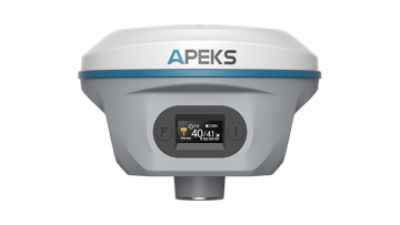
Maximizing Accuracy and Efficiency: A Comprehensive Guide to the AP20 GNSS Receiver
In the realm of accurate positioning and surveying, maximizing both accuracy and efficiency is crucial for professionals across various industries. The AP20 GNSS Receiver stands out as a comprehensive solution that caters to these needs, providing advanced features designed to enhance performance in the field. Its robust technology enables precise measurements while ensuring reliable data collection, making it an indispensable tool for surveyors and engineers.
One of the standout characteristics of the AP20 GNSS Receiver is its ability to operate in challenging environments. With enhanced signal processing and multiple frequency support, users can minimize disruptions caused by obstructions or atmospheric conditions. This versatility enables effective operations in urban settings, dense foliage, and rugged terrains, ensuring that projects stay on track without compromising data integrity.
Furthermore, the device is designed for ease of use, allowing professionals to focus on their tasks rather than on complicated technical setups. Its intuitive interface, coupled with powerful connectivity options, facilitates quick data transfer and real-time monitoring. This level of efficiency not only speeds up workflows but also enhances the overall productivity of teams working on critical projects, making the AP20 GNSS Receiver an essential asset for anyone striving for high-quality results in their surveying endeavors.
FAQS
: GNSS (Global Navigation Satellite Systems) provides vital location and timing data, while IMUs (Inertial Measurement Units) enhance this information by tracking acceleration and angular velocity. Their integration improves performance, especially in challenging environments where GNSS signals may be compromised.
Important factors include the intended application (e.g., autonomous vehicles or surveying), required accuracy levels, data rates, environmental conditions, receiver specifications (such as the number of channels and supported GNSS signals), and integration capabilities with other sensors like IMUs.
The GNSS market is projected to reach $210 billion, while the IMU market is anticipated to grow at a CAGR of 7.8% from 2020 to 2025, driven by demand for precision in applications such as autonomous navigation.
The main challenges include aligning different data sources, as IMUs can suffer from drift and GNSS can face obstructions and signal degradation. Advanced algorithms and robust calibration methods are necessary for effective data fusion.
By combining GNSS and IMU data, users can maintain positional accuracy even when GNSS signals are weak or unavailable, leveraging dead reckoning capabilities for improved navigation performance.
Users should be prepared for rapid developments in GNSS technology, which may significantly impact system capabilities. Ensuring the selected GNSS receiver and IMU can accommodate these updates is crucial for future applications.
Understanding environmental conditions, such as urban canyons or dense forests, is vital for determining the robustness required in a GNSS receiver to ensure dependable performance in challenging settings.
Power consumption is essential, especially for mobile applications where compact and energy-efficient designs are preferred. This factor influences the overall performance and longevity of devices in the field.
A receiver that supports multiple GNSS constellations (like GPS, GLONASS, Galileo, and BeiDou) provides enhanced positioning performance and reliability, crucial for accurate navigation in diverse environments.
Real-time applications demand low-latency data fusion to maintain performance. Assessing the latency requirements is vital to ensure timely and accurate positioning information in dynamic scenarios.
Conclusion
The article "How to Choose the Right GNSS Receiver IMU for Your Applications in 2025" emphasizes the critical understanding of GNSS and IMU technologies relevant to the evolving needs of various industries. It highlights essential factors in selecting GNSS receivers, evaluating IMU specifications for precision navigation, and the integration of these technologies, which can enhance accuracy but may present certain challenges.
Moreover, the discussion extends to future trends in GNSS and IMU technology development, showcasing a variety of use cases across different sectors. Budgeting and cost considerations are also addressed, providing insights for organizations looking to implement GNSS receiver IMU solutions effectively. Overall, this guide aims to equip decision-makers with the knowledge needed to leverage these technologies for optimal performance in 2025 and beyond.